Home › Plumbers › Slab leak detection & repair
What a slab leak is — and why Houston gets so many
A slab leak is a leak in one of the water lines that runs through or beneath the concrete foundation your house sits on. Most Houston homes were built with copper supply lines embedded in or under the slab, and when one of those lines springs a pinhole or a cracked joint, the water has nowhere obvious to go — so it shows up as a warm spot, a pressure drop, a sky-high bill, or moisture pushing up through the floor.
The reason Houston sees so many comes down to dirt. We sit on expansive clay soil that swells with our wet springs and shrinks through drought-stricken summers. That constant movement shifts the slab and the pipes inside it, abrading copper against concrete and stressing every joint until one gives. It's a Gulf Coast problem more than a national one, which is exactly why a plumber who works Houston homes every week reads these faster than a national franchise crew.
Signs you may have a slab leak:
- A warm spot on the floor you can feel underfoot — a hot-water-line leak under the slab.
- The sound of running water with every faucet, toilet, and appliance shut off.
- An unexplained spike in your water bill with no change in how you use water.
- Low or dropping water pressure throughout the house.
- Cracked, buckling, or warping flooring, or a persistent damp/mildew smell.
- Your water meter keeps moving when nothing is running (a quick DIY check).
Two or more of these together? Get it confirmed quickly — a slab leak only gets more expensive the longer it runs.
How pros find it — without jackhammering your floor
This is the part that protects your wallet. A qualified plumber locates the leak before opening any concrete, using non-destructive equipment:
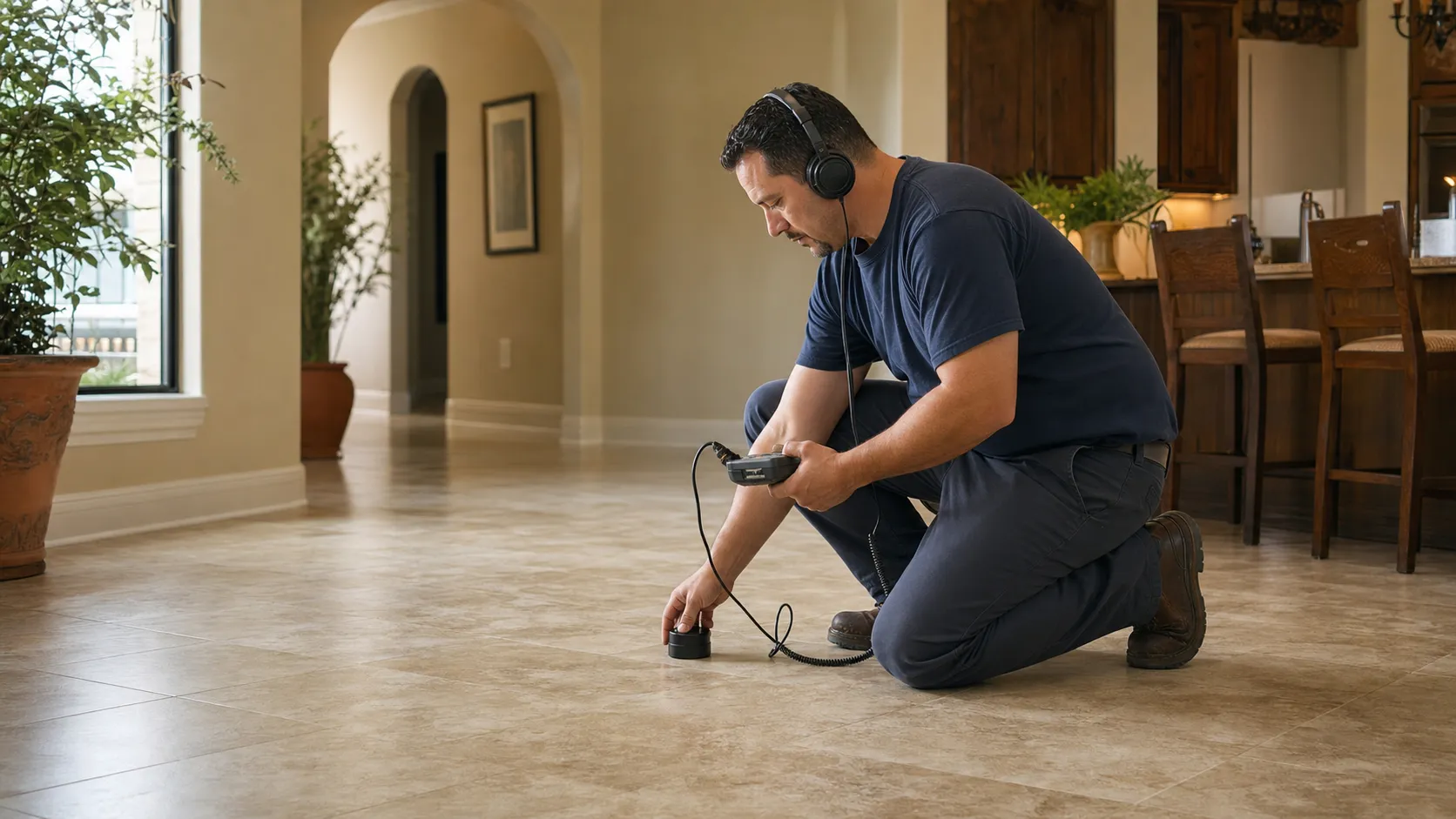
- Acoustic listening. Sensitive ground microphones pick up the sound of water escaping under pressure, narrowing the leak to a small area.
- Line pressure testing. Isolating and pressurizing the hot and cold lines separately confirms which line is leaking and roughly where.
- Thermal imaging. For hot-water leaks, an infrared camera reveals the heat signature spreading under the floor.
- Tracer gas or correlation. For stubborn leaks, a safe tracer gas or electronic correlator pinpoints the exact spot.
Red flag: any contractor who wants to start breaking concrete to "go find it." Detection is a $150–$800 step that saves thousands in unnecessary demolition. Insist on it.
Repair options and what they cost in Houston — 2026
Once the leak is located, there are three common paths. The right one depends on the age of your plumbing and how many leaks you've had.
| Scope | Typical Houston range (2026) |
|---|---|
| Electronic leak detection / locating | $150–$800 |
| Spot repair — access through slab, single leak | $800–$3,000 |
| Reroute one line above the slab | $1,500–$4,000 |
| Whole-home reroute / repipe (multiple failing lines) | $8,000–$20,000+ |
These are typical Houston ranges from published 2026 cost guides (Repipe Solutions, Angi) — not a quote; your matched plumber sets the price. Ranges cover the plumbing work. Floor and drywall restoration is usually separate — and is the part Texas homeowners insurance is most likely to help with (see below).
Repair vs reroute vs repipe — how to choose
- Spot repair makes sense for a single leak in otherwise-healthy piping — the cheapest fix when the rest of the system has life left.
- Reroute one line abandons the failed under-slab run and reroutes it overhead through walls and attic. Smart when one specific line keeps failing but the others are fine.
- Whole-home reroute / repipe abandons the under-slab copper entirely. If you've had multiple slab leaks in a few years — the pattern in older Houston homes with original copper — this ends the cycle for good. See our whole-home repipe guide for that decision and its costs.
Does insurance cover it? The Texas reality
Here's the honest version most contractors won't spell out. Standard Texas homeowners policies generally cover the resulting water damage — ruined flooring, drywall, and often the cost to break and re-pour the slab to access the pipe — when the leak is "sudden and accidental." What they typically don't cover is the plumbing repair itself (the pipe), and some policies exclude the access cost too.
Practically, that means: document everything from day one (photos, the plumber's written diagnosis, the detection report), call your carrier early, and don't authorize demolition before you understand your coverage. A vetted plumber who handles Houston slab leaks weekly knows how to document a claim properly — that paperwork is often worth more than the repair discount a cut-rate operator offers.
How we vet Houston plumbers
Slab leaks attract scare-tactic sales — exactly why vetting matters here. Before any plumber receives a single lead from us, we confirm:
- Active Texas Responsible Master Plumber (RMP) license — verified against the Texas State Board of Plumbing Examiners (TSBPE) register.
- Current general liability insurance — checked, not just claimed.
- Electronic leak-detection capability — they locate before they demolish.
- A review history of 4 stars or better across Google and the BBB, with no unresolved TSBPE complaints.
- Houston service coverage — works our clay-soil homes every week, local to your ZIP.
Quotes from partner pros are honored — and you'll always get the detection result and a written scope before anyone touches concrete. You're free to get a second opinion and walk.
Frequently asked
What are the signs of a slab leak?
The classic ones in Houston: a warm spot on the floor (for a hot-water-line leak), the sound of running water when every fixture is off, an unexplained jump in your water bill, a drop in water pressure, cracked or buckling flooring, or mildew and a damp smell with no visible source. One sign alone can be something else; two or more together strongly point to a slab leak. A plumber confirms it with leak-detection equipment before anyone opens concrete.
Does homeowners insurance cover slab leak repair in Texas?
Usually it covers the resulting water damage but not the pipe repair itself. Most Texas homeowners policies pay to fix what the water ruined — flooring, drywall, the slab access — when the leak is 'sudden and accidental,' which most slab leaks qualify as once they cause detectable damage. What they typically won't pay for is the plumbing repair (the pipe) or, in many policies, the cost to access it. Coverage varies by policy, so document everything with photos and the plumber's written diagnosis and call your carrier early.
Can a plumber find a slab leak without breaking my floor?
Yes — that's the entire point of electronic leak detection. A qualified plumber uses acoustic listening equipment, line pressure testing, and sometimes thermal imaging or tracer gas to pinpoint the leak's location to within a small area before any concrete is touched. Be wary of anyone who wants to start jackhammering to 'go find it' — that's how a $2,000 repair becomes a $6,000 demolition. Detection comes first, always.
Should I repair, reroute, or repipe a slab leak?
It depends on the age of the home and how many leaks you've had. A single leak in an otherwise-healthy line is often a spot repair (access through the slab) or a reroute of that one line above the slab. But if you've had two or three slab leaks in a few years — common in older Houston homes with original copper under the slab — rerouting line by line gets expensive, and a whole-home repipe that abandons the under-slab pipes entirely is usually the smarter long-term money. A good plumber lays out all three numbers.
Why are slab leaks so common in Houston?
Houston sits on expansive clay soil that swells when it's wet and shrinks when it's dry. Through our wet springs and drought-stricken summers, that soil is constantly moving — and it drags the slab and the copper water lines buried in it along for the ride. Decades of that flexing abrades pipes against the concrete and stresses the joints until a pinhole opens. It's why slab leaks are far more common here than in most of the country, especially in homes built before modern pipe-sleeving practices.
How long does slab leak repair take?
Detection itself is usually a 1–3 hour visit. A spot repair through the slab is often done in a day. A single-line reroute typically takes one to two days depending on the run and the drywall involved. A whole-home reroute or repipe runs two to four days. The bigger variable is restoration — patching the slab, replacing flooring, and drywall repair — which can add days and is often handled by a separate restoration crew (and is the part insurance is most likely to cover).
Is it safe to ignore a slab leak for a while?
No. A slab leak doesn't heal, and it doesn't stay the same size. Beyond the water you're paying for every month, the constant moisture under the slab can undermine the soil, worsen foundation movement, feed mold, and ruin flooring from underneath. What starts as a small, cheap-to-fix pinhole becomes a structural and remediation problem the longer it runs. If you suspect one, get it confirmed quickly — confirming it costs far less than living with it.
Think you have a slab leak? Get it confirmed.
Drop your number and ZIP at the top of this page. A vetted Houston plumber calls you back within 30 minutes during business hours, locates the leak with electronic equipment, and gives you honest repair, reroute, and repipe numbers in writing before any concrete is touched. Serving Houston and the surrounding neighborhoods.
Request a callback