Skip to content
Recessed & Cove Lighting · Houston, TX

Houston recessed & cove lighting — matched to a licensed local electrician.

Kitchens and living rooms, bedrooms and baths — tell us which ceilings you're lighting and we connect you with a vetted Houston electrician who plans the layout, handles wiring and dimming, and leaves a clean ceiling. One form, a callback within 30 minutes during business hours, no upfront fees.

Licensed TDLR electricians
Houston-local matching
Insurance verified
No upfront fees
How this works

A referral service — not the crew on the ladder

Houston Service Hub doesn't perform electrical work. You tell us about the recessed lighting project; we match you with a licensed Texas (TDLR) electrician local to your ZIP who handles the on-site assessment, layout, wiring, permits, and installation.

The licensed electrician is responsible for the work, the license, the insurance, and any warranty on the job. We verify their credentials before a single lead is routed — and re-check periodically.

You pick the rooms · the matched pro plans and installs the layout
Choose your room

Where Houston homeowners add recessed lighting — and what each room takes

Every room routes to a licensed electrician who does that exact work. Here's what shapes each one.

Kitchen

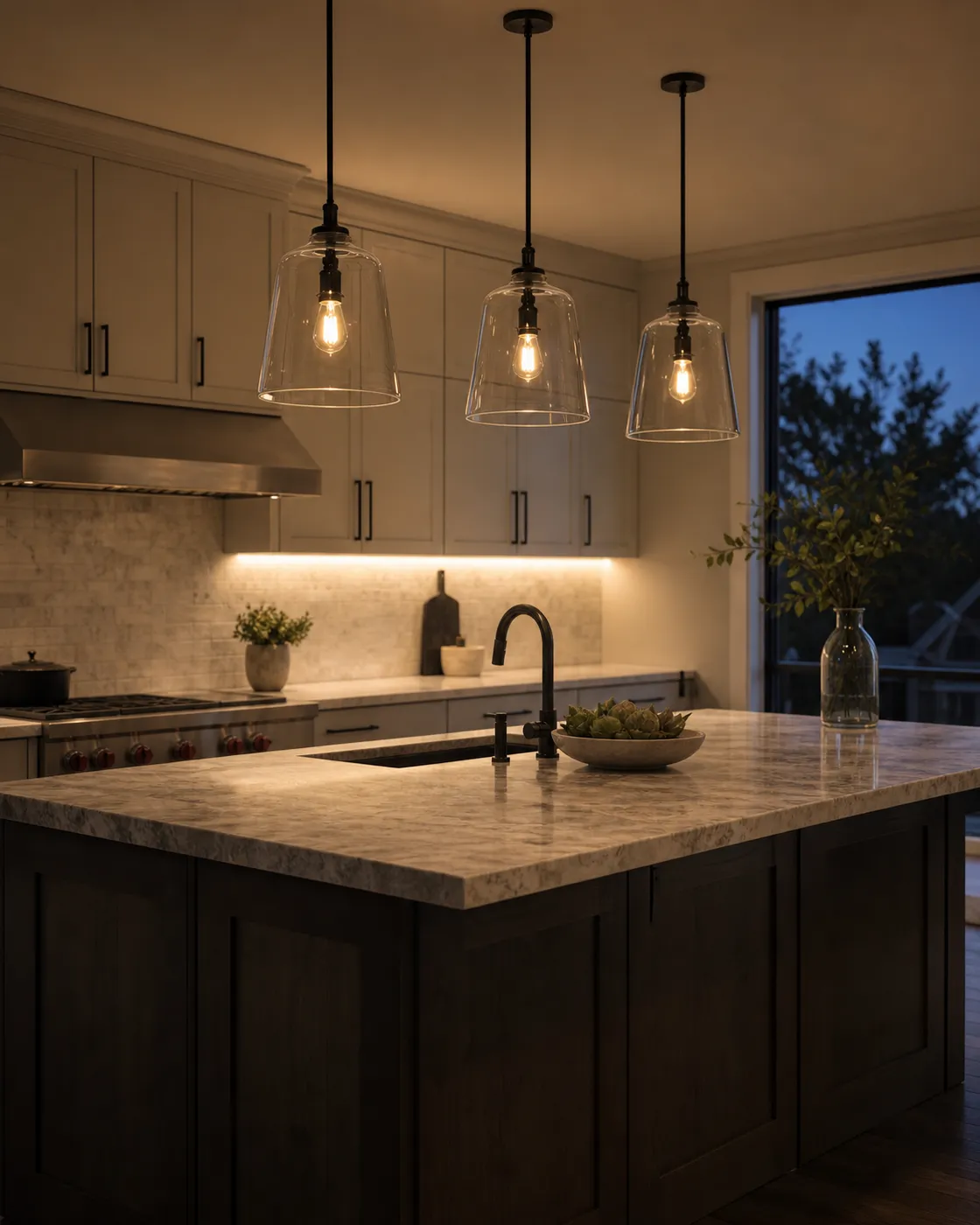
Recessed cans over counters and walkways, pendants over the island, under-cabinet strips for the work surface — the kitchen mixes fixture types more than any room. Spacing has to put light where you prep, not on the back of your head.

Get a quote →


Living & family room

A grid of evenly spaced wafers or cans replaces the single ceiling fixture without the runway look. Dimming and switching zones let the same ceiling handle movie night and homework.

Get a quote →

Bedrooms & hallways

Bedrooms want soft, low-glare light on a dimmer — not an interrogation grid. Hallways take small-aperture fixtures spaced for even coverage along the run.

Get a quote →

Bathroom & shower

Fixtures over tubs and showers must be wet-rated and trimmed for damp air. At the vanity, placement flatters the mirror instead of shadowing it.

Get a quote →

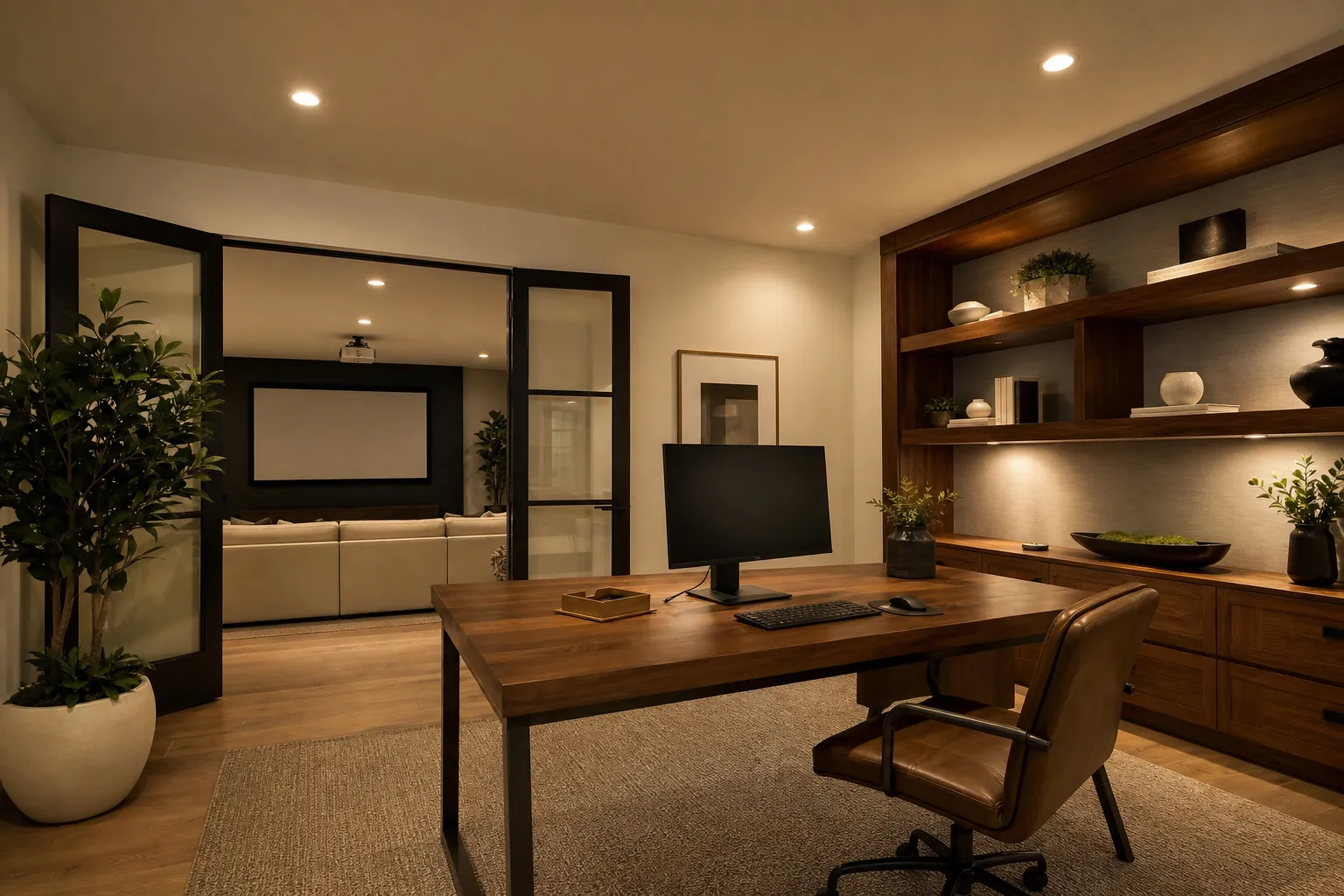
Home office & media

Screens punish glare. Offices and media rooms take deep-baffle or adjustable trims placed off the screen axis, with dimming for the time of day.

Get a quote →

Whole-floor refresh

One plan across kitchen, living, and halls keeps apertures, trims, and color temperature consistent — instead of a ceiling that grew one fixture at a time.

Get a quote →
Fixture formats

Wafer vs. can — what goes in the ceiling

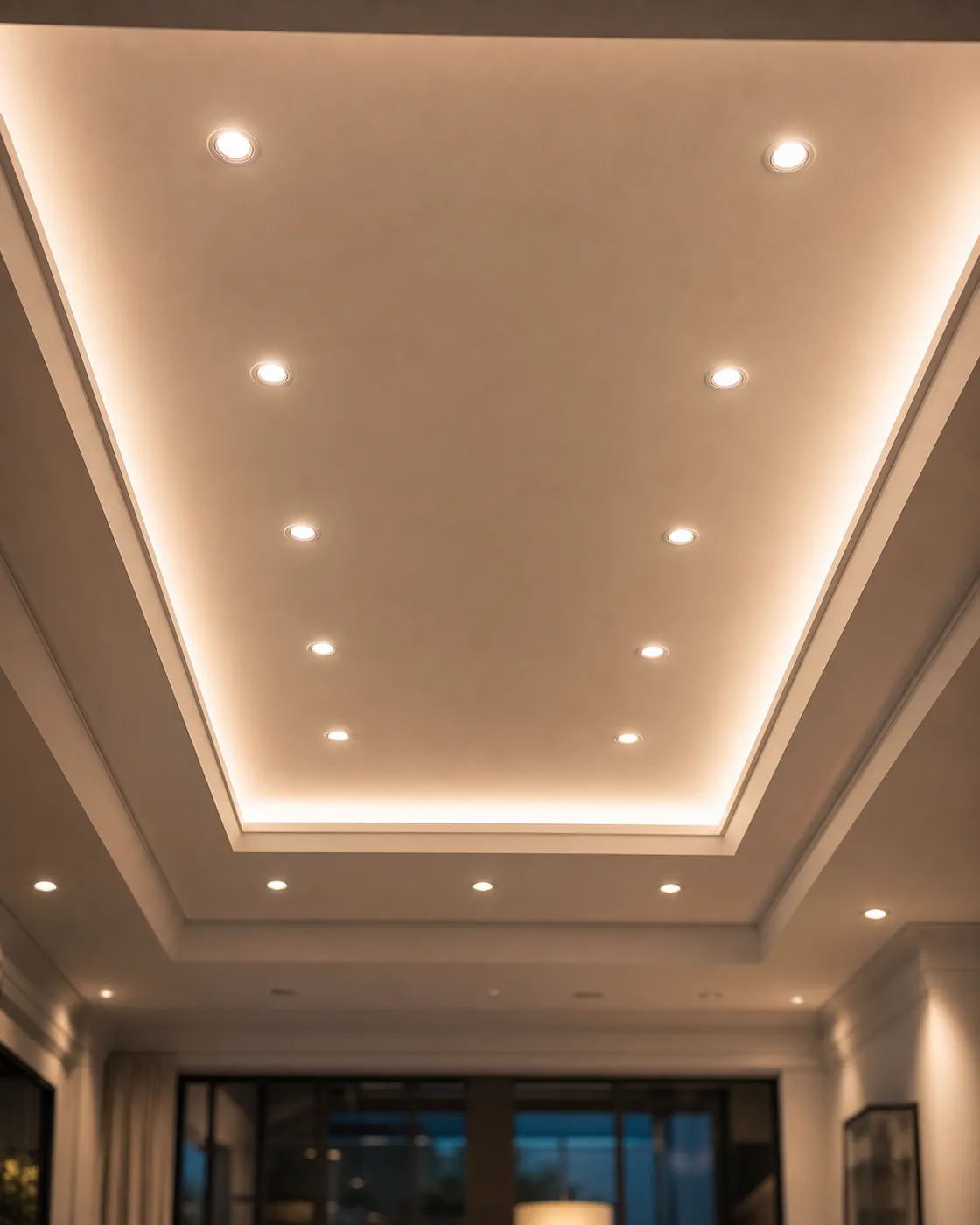
Most retrofits use slim LED wafers; new construction and some remodels take full IC-rated housings. Cove and coffer details take a third route — LED strip concealed behind a ceiling detail. The matched electrician recommends the format per room after checking the ceiling.

Wafer / canless LED

Most retrofits & tight ceilings.

A thin LED puck mounts to the drywall with a slim driver box tucked above — no housing in the joist bay. It fits shallow and insulated ceilings, and it's the usual pick when there's no attic access.

  • Fits shallow and insulated ceilings where housings won't
  • Integrated LED — the unit is replaced, not a bulb
  • Driver tucks through the same ceiling opening

Can / housed (IC-rated)

New construction & some remodels.

A full housing sits in the joist bay with the trim and lamp below. IC-rated airtight housings can touch insulation, and the format takes interchangeable trims and lamping.

  • IC-rated airtight housings where insulation touches
  • Interchangeable trims — baffle, reflector, adjustable, wet-rated
  • Needs joist-bay depth and access to set the housing
What the ceiling decides

Five ceiling realities that shape a recessed layout

Joists, insulation, access, ceiling type, and finish work decide what's possible before style does.

Joists & framing

Fixtures land between joists, not through them. Beams, ducts, and straps shape the layout before symmetry does — the pro maps the bays first.

Insulation & IC ratings

Where a housing touches attic insulation it must be IC-rated — ideally airtight. Non-IC housings need clearance, or the plan swaps to wafers.

Attic access

An open attic makes wiring straightforward. No access means fishing cable through finished ceilings — doable, but it changes the method and the effort.

Vaulted & slab ceilings

Sloped ceilings take angled or adjustable fixtures. Slab and furred ceilings leave little depth — often wafer territory.

Patching & paint

Cutting a ceiling means some patching. Who patches and who paints is agreed in the quote up front — so finish work isn't a surprise.

Layout & spacing

A layout you notice — a ceiling you don't

Good recessed lighting is planned, not just cut in. A licensed electrician spaces fixtures for the room's height and use, keeps glare off sight lines, and leaves the other layers room to work.

  • 01
    Even coverage, not hot spots

    Fixtures spaced so pools overlap softly at counter and floor height — the room reads as one lit surface, not a row of bright circles.

  • 02
    Glare under control

    Deeper baffles, smaller apertures, and placement off sight lines keep the source quiet. You notice the room, not the ceiling.

  • 03
    Layers still matter

    Recessed is the ambient layer, not the whole plan. Task and accent light still come from pendants, lamps, under-cabinet strips — and cove or coffer runs where the ceiling has the detail for them.

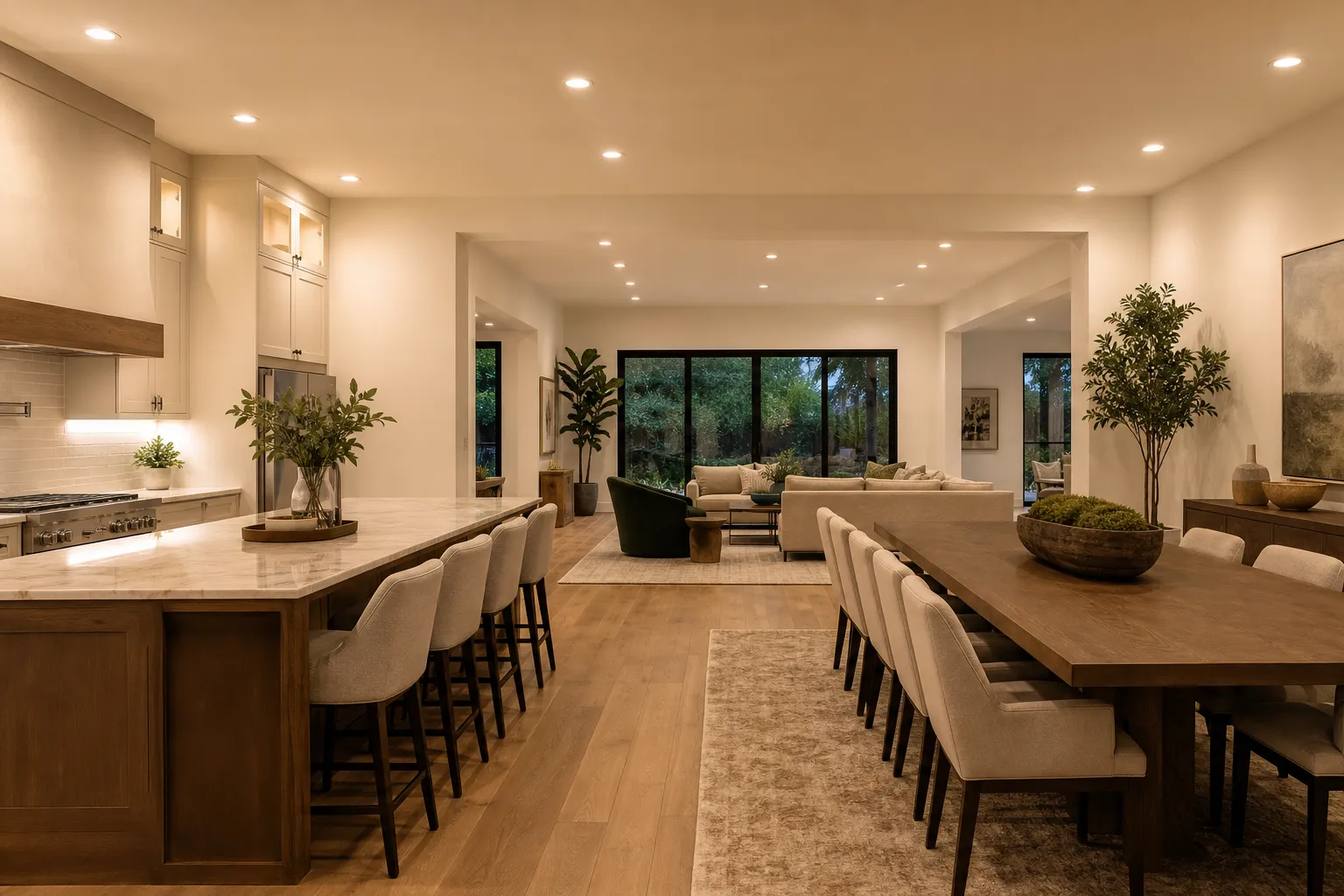
A warmly lit Houston living space with layered, glare-controlled ceiling lighting
Trim, color & dimming

The details that decide how it feels

Aperture, trim, color temperature, and dimming shape the result more than the fixture count.

Trim styles

Baffle for glare control, reflector for punch, adjustable for art and sloped ceilings, wet-rated for showers. The trim decides how the light feels.

Color temperature

Warm settings suit living spaces; cooler task settings suit kitchens and offices. Selectable-CCT fixtures let the pro set it per room at install.

Dimmer compatibility

LED wafers and retrofit lamps need compatible dimmers to avoid flicker. The matched pro pairs fixture and dimmer — and checks the switch box in older homes.

What shapes the price

Recessed lighting cost drivers in Houston

We don't quote recessed lighting sight-unseen — every ceiling is different. These are the factors the licensed electrician weighs when pricing your job.

Cost driverWhy it moves the number
Fixture count & typeMore openings mean more layout, cutting, wiring, and patching; specialty trims and selectable-CCT fixtures add hardware.
Ceiling access & framingOpen attic bays are quick; fishing finished or vaulted ceilings — and working around joists, ducts, and straps — adds time.
New circuits & switchingA new switched zone, or a circuit already near capacity, means panel and wiring work beyond the fixtures themselves.
Dimming & controlsCompatible dimmers, multi-zone switching, and smart controls add hardware and setup.
Patch & paint scopeEvery cut ceiling needs some patching; who patches and who paints — and to what finish — is set in the quote.
Permits & inspectionWhen circuits are added or altered, City of Houston permit and inspection add fees and time.

Ranges vary widely by home. The matched licensed electrician confirms an exact quote in writing after seeing the ceilings — before any work starts.

Permits, zoning & responsibility

Who pulls the permit — and who's on the hook

Permits & local rules

Swapping trims or lamps on existing openings usually doesn't need a permit. Adding or altering circuits — a new recessed layout, new switching, a run back to the panel — typically does, and the City of Houston requires an electrical permit and inspection for that work. HOA and deed restrictions rarely reach interior lighting, but historic-district exteriors can differ, so the pro checks.

The licensed electrician is responsible

The matched electrician holds an active Texas TECL license, pulls any required permit in their name, and is responsible for code-compliant work and passing inspection. Houston Service Hub does not pull permits or perform work — the licensed pro does.

Coming soon

Real Houston recessed lighting projects

We're assembling permissioned, homeowner-approved case studies of recent Houston recessed lighting work — with real details, not stock claims. This is where they'll live.

Our standard

How we vet Houston electricians

Before any electrician receives a single recessed lighting lead from us, we confirm:

  • Texas TDLR license verified

    TECL number on file and verified before any lead is routed.

  • General liability insurance confirmed

    Active coverage checked — not just claimed.

  • 4★+ review history

    A track record of satisfied Houston homeowners.

  • No unresolved TDLR complaints

    Clean standing with the Texas licensing board.

  • Houston service coverage

    Works Houston homes every week — local to your ZIP.

A licensed electrician installing a recessed light fixture
Service areas

Recessed lighting electricians across Greater Houston

Matched to your ZIP — inside Loop 610 out to Katy, Sugar Land, Pearland, and The Woodlands.

If you're elsewhere in Greater Houston, ask on the form. See all service areas →

Questions

Houston recessed lighting FAQ

Q. Do you install recessed lighting yourselves?

No — Houston Service Hub is a referral service. We match you with a licensed local electrician who plans the layout and does the installation.

Q. Can recessed lights go in my ceiling?

Usually — it depends on joist layout, insulation, and attic access. Slim wafer fixtures fit most ceilings that can't take a full housing. The matched electrician confirms what's possible on the site visit.

Q. Wafer or can — which should I choose?

Wafers suit retrofits, shallow ceilings, and insulated bays with no attic access; IC-rated can housings suit new construction and remodels that want interchangeable trims. Many projects mix both — the pro recommends per room.

Q. How many lights will my room need?

It depends on ceiling height, room size, beam spread, and what the room is used for. The electrician plans spacing for even coverage rather than a fixed rule — you'll see the exact count in the written quote.

Q. Do I need a permit for recessed lighting in Houston?

Swapping trims or lamps on existing openings usually doesn't need one. Adding or altering circuits — a new recessed layout, new switching — typically does, and the licensed electrician pulls the permit.

Q. Who patches the drywall afterward?

Patching and paint responsibility is agreed in the written quote before work starts. Ask the matched pro to spell out the finish level — patched, textured, or paint-ready.

Q. Is there any cost to get matched?

No. Matching and the quote are free; you pay the electrician directly only for work you choose to hire.

Get started

Tell us about the rooms. A licensed Houston electrician calls you back.

One minute to submit. One callback. No upfront fees.

  • Vetted, licensed Houston electricians for recessed & cove lighting
  • Callback within 30 minutes during business hours
  • No obligation — you decide whether to book
Get a free quote
A vetted Houston pro calls you back fast.
Service Lighting installation

By submitting, you agree we may pass your details to a vetted Houston contractor. No spam. No upfront fees.