Home › Electricians › Panel upgrade cost
What an electrical panel upgrade is — and why Houston homes need them
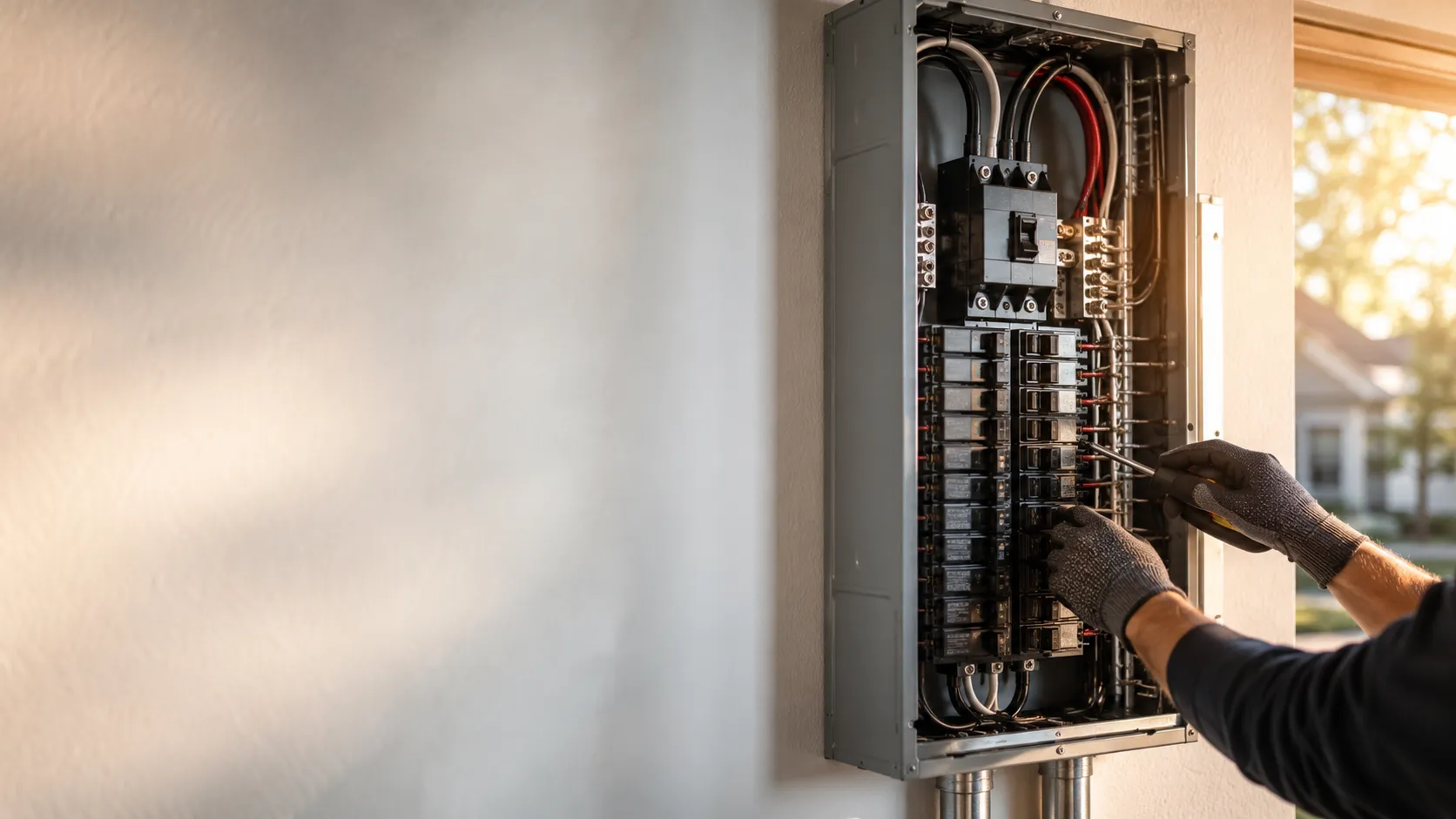
A panel upgrade replaces the main breaker box that splits incoming utility power into the circuits running through your house. In Houston, "upgrade" almost always means going from 100-amp (or a vintage fuse box) to 200-amp service, sometimes 300 or 400 for larger homes with EV chargers, pools, or backup generators.
Most pre-1990 Houston homes were built with 100-amp panels meant for a single AC unit, a gas range, and a few lights. Modern load looks different: two-stage AC compressors, induction ranges, heat-pump water heaters, EV charging, pool equipment, and a kitchen full of high-draw appliances. The panel itself isn't unsafe just because it's small — it becomes a problem when the bus bar is corroded, the brand is on the insurance non-renewal list, or you're trying to add capacity it was never designed to carry.
Signs your Houston panel needs an upgrade:
- Fuse box instead of breakers, or any panel labeled Federal Pacific (FPE), Zinsco / Sylvania, or Challenger — these have documented failure modes and insurers flag them.
- Breakers that trip when the AC and oven run together (capacity issue, not a wiring fault).
- Rust, corrosion, scorch marks, or warm spots on the panel face — Houston humidity and post-flood panels show this.
- No room for new breakers, and you want to add an EV charger, pool pump, addition, or backup generator.
- Aluminum branch wiring landing in the panel (common in 1965–1973 Houston builds) — the panel itself usually needs upgrading at the same time the wiring is corrected.
- Your insurer sent a notice asking about your panel brand.
Cost by Houston home age
Published 2026 cost guides put a Houston panel upgrade around $1,300–$3,800 (Valderrama, HomeGuide), and that's a fair starting range — but what you land on depends mostly on the panel and service-entrance condition the electrician finds when they pull the dead front. These are typical ranges, not a quote; your matched electrician gives the binding number. Here's how it breaks down by the era of Houston home you're working with.
Pre-1950 homes (Houston Heights bungalows, East End, Third Ward older stock)
Original panels in this vintage are almost always fuse boxes or first-generation 60–100A breaker panels installed during a 1960s–80s update. Knob-and-tube wiring may still be in walls. The service mast itself is often undersized, and the meter base may need replacement to handle modern amperage.
| Scope | Typical Houston range (2026) |
|---|---|
| Fuse box → 100A breaker panel (existing mast OK) | $2,000–$3,200 |
| Fuse box → 200A panel + new meter base | $3,500–$5,500 |
| Add: service mast replacement | + $600–$1,400 |
| Add: full grounding system to current code | + $250–$600 |
Almost every pre-1950 panel job ends up touching the mast and grounding electrode because original installs predate the current code. Budget for the higher end.
1950s–1970s homes (Sharpstown, Memorial-area tracts, Spring Branch, old Bellaire)
This is the era that hits hardest on the wallet. Many homes have aluminum branch circuits (1965–1973 especially), Federal Pacific or Zinsco panels are common, and the original 100A service was sized for a smaller home than what's actually there now after additions. A panel swap alone won't address the aluminum wiring — but it's the right time to remediate the connections at the panel itself.
| Scope | Typical Houston range (2026) |
|---|---|
| Direct 100A → 100A swap (flagged brand replacement) | $1,400–$2,400 |
| 100A → 200A upgrade, indoor panel, mast OK | $1,800–$3,200 |
| 100A → 200A, new meter base + mast | $3,000–$4,800 |
| Add: aluminum-wire pigtailing at panel (Cu-Al lugs) | + $400–$900 |
If you have aluminum branch wiring throughout, see the whole-home rewire guide for the remediation-vs-rewire decision. The panel job alone won't fix outlet-side aluminum connections.
1980s–2000s homes (Katy, Sugar Land, Cypress, Kingwood, newer Memorial)
These homes were almost all built with 150A or 200A service from the start, modern copper branch wiring, and breaker panels rather than fuse boxes. "Upgrade" usually means one of three things: capacity expansion for an EV charger or pool, replacement of a panel brand later flagged as defective (Challenger was common in this era), or panel relocation during a remodel.
| Scope | Typical Houston range (2026) |
|---|---|
| 150A → 200A capacity upgrade | $1,600–$2,800 |
| 200A like-for-like panel swap (Challenger, Pushmatic, etc.) | $1,400–$2,400 |
| 200A → 320/400A for EV + pool + addition | $4,000–$8,000+ |
| Add: subpanel for detached garage / ADU | + $1,200–$3,000 |
2000s+ homes (newer Katy, Pearland, Spring, The Woodlands south of 1488)
Newer-build homes typically came with 200A service and a national-brand panel (Square D, Eaton, Siemens). Panel work in this vintage is rarely a full upgrade — usually it's adding capacity for a Level 2 EV charger that pushes a borderline panel over the line, or relocating the panel during a renovation.
| Scope | Typical Houston range (2026) |
|---|---|
| 200A → 200A panel relocation | $2,000–$3,800 |
| 200A → 320A for EV + battery storage | $3,500–$6,500 |
| Add: surge protective device (whole-home SPD) | + $250–$600 |
100 vs 200 vs 400 amp — what to actually pick
Bigger is not automatically better. Service size affects cost, the size of the meter base and mast, and how CenterPoint connects you. Most Houston homes land on 200A. A few need more, and a few are fine staying smaller.
- 100A: Fine for a small home (under ~1,500 sq ft) with gas heat, gas range, gas water heater, no EV, no pool, no major additions planned. Most homes that currently have 100A can keep it if the panel is healthy and the load calc supports it.
- 200A (the default answer): Right for ~1,500–3,500 sq ft homes, all-electric loads, one EV charger, one AC system, normal modern appliance mix. This is what 9 out of 10 Houston upgrades land on.
- 320A / 400A: Worth it for larger homes (3,500+ sq ft), two HVAC systems, a pool with heater, two EV chargers, a workshop, or an ADU on the property. CenterPoint will require a larger meter base — that's a real cost increase, not a markup.
The licensed electrician should run a load calculation per NEC 220 before recommending a size. If a pro quotes a service size without doing one, that's a sign to get a second opinion.
Permits and CenterPoint — the part nobody explains
About a third of the project timeline isn't the panel work itself — it's coordinating the City of Houston permit and the CenterPoint disconnect. Skipping either is how unlicensed jobs end up with a re-do and a fine. Here's what the licensed pro handles, in order:
- Load calc + scope confirmation. The electrician runs an NEC 220 load calculation based on your square footage, appliance load, and any planned additions (EV, pool, generator). The result determines whether you need 200A, 320A, or larger, and whether the meter base needs to grow.
- Permit application. They submit the electrical permit through the City of Houston permitting system. City fee is typically $50–$300 depending on scope and amperage. Permits typically issue in 1–5 business days for a residential panel.
- CenterPoint disconnect scheduling. Once the permit is in hand, the electrician requests a CenterPoint disconnect at the meter for the install day. CenterPoint usually schedules 3–10 business days out; faster windows exist for hardship cases. Hurricane-restoration season can push this further.
- Install day. CenterPoint crew arrives and pulls the meter. The electrician swaps the panel, replaces the meter base and mast if needed, lands all the existing branch circuits, upgrades the grounding electrode system to current code, and reinstalls the dead front. Most full upgrades are done in a single working day.
- City inspection. The City of Houston electrical inspector signs off on the work. Most inspections happen within 1–3 business days of the install. If anything fails (uncommon with a licensed Texas TDLR contractor), they call out the correction and a re-inspection is scheduled.
- CenterPoint reconnect. Once the city tags the permit as passed, CenterPoint reconnects the meter. This is usually same-day or next-day after the city sign-off. Power's back; the job is done.
The flood-zone wrinkle: if your house took water in Harvey or Imelda, the city sometimes requires the panel be raised above the BFE (base flood elevation) during an upgrade. That can add a few hundred dollars and a structural-attachment conversation. The licensed pro will tell you straight whether your address triggers that requirement.
How we vet Houston electricians
Before any electrician receives a single lead from us, we confirm:
- Active Texas TDLR electrical license — TECL number on file and verified against the state register.
- Current general liability insurance — checked, not just claimed.
- A review history of 4 stars or better across Google and the BBB.
- No unresolved TDLR complaints — clean standing with the state board.
- Houston service coverage — works Houston homes every week, not a traveling crew.
Quotes from partner pros are honored — if a number changes after they open the panel, it's because the diagnosis changed (corroded mast, hidden aluminum, surprise CenterPoint requirement), not because of bait pricing. You're free to walk.
Frequently asked
How much does a 200-amp panel upgrade cost in Houston?
Most Houston 200-amp upgrades run $1,600–$4,000 fully installed. The lower end is a clean indoor swap on an existing 100-amp panel with the meter base intact. The higher end is meter-base replacement, new service mast, full grounding upgrade, and a few new dedicated circuits at the same time.
Do I need a permit to upgrade my electrical panel in Houston?
Yes. The City of Houston requires an electrical permit for any panel replacement or service upgrade. The licensed electrician pulls the permit on your behalf — typical city fee is $50–$300 depending on scope. A city inspection is required before CenterPoint reconnects power.
Does CenterPoint have to be involved in a panel upgrade?
Yes, anytime the meter base or service mast is touched. CenterPoint disconnects power at the meter so the electrician can work safely, then reconnects after the city inspector signs off. Coordinating the disconnect and reconnect is the part of the job that adds days, not the panel swap itself.
How long does a panel upgrade take in Houston?
The physical work is typically one full day. Total project time runs 1–3 weeks because of permit issuance, CenterPoint disconnect scheduling, and inspection windows. Hurricane season can stretch that further if CenterPoint crews are tied up on restoration work.
Will my insurance cover a panel upgrade?
Standard homeowners insurance does not pay for a planned panel upgrade. It will sometimes pay for replacement after a documented surge event, fire, or storm damage. If your panel is a Federal Pacific, Zinsco, or Challenger, some insurers will non-renew until it's replaced — that's a strong reason to upgrade, but the insurer still won't pay for it.
Can I add an EV charger without upgrading my panel?
Sometimes — depends on the load calculation. Many older Houston homes on 100-amp service can't add a 40–50A EV charger without bumping into the panel's total capacity. The electrician runs a load calc first; if you're tight, the panel upgrade goes in before the charger.
Is a panel upgrade worth it before I sell the house?
If you're sitting on a fuse box or a flagged-brand panel (FPE, Zinsco, Challenger), yes — buyers' inspectors flag those, and lenders and insurers increasingly push back. For a healthy 100-amp panel in good shape, it's not a guaranteed payback unless the buyer specifically wants 200A capacity for an EV or addition.
Ready for a real panel-upgrade quote?
Drop your number and ZIP at the top of this page. A vetted Houston electrician calls you back within 30 minutes during business hours, runs the load calc, and gives you a firm number in writing before any work starts.
Request a callback